The American College of Physicians’ guideline starts from the fact that most new low back pain improves over time, whatever the treatment. So the first steps are things you can do yourself: see what helps back pain, and what the evidence says.
If you want it examined, the first visit looks at your hips, pelvis and mid-back as well as the painful area, and you get the plan and its total cost in writing before you agree to anything. Same-day appointments are often available — a doctor is in the office six days a week.
The Shift Chiropractic is a chiropractic clinic in downtown Oakland, California, offering chiropractic adjustment, soft tissue therapy, extremity care, postural correction and rehabilitative exercise. We have practiced at 435 8th Street #203, Oakland, CA 94607, on the corner of 8th and Broadway, since 2013. Same-day appointments are often available — a doctor is in the office six days a week.
Back pain affects every part of a day — sleeping (see sleep positions for your neck and lower back), working, simply standing up. The back includes the thoracic spine through the mid-back and the lumbar spine below it, along with the sacrum, sacroiliac joints and pelvis. Pain in one of them rarely stays local: shortened hip flexors pull on the lumbar spine, restricted thoracic rotation loads the low back, and weak deep core and gluteal muscles leave the lumbar segments doing work they were not built for.
Common causes of back pain we see
We perform a full spinal assessment, extending well beyond the painful area, to find the root cause of your back pain. That assessment covers:
Adjusting, soft tissue work and specific exercises are matched to what the assessment finds. When needed, we may recommend X-rays or MRI imaging to better understand your condition and guide our plan of care.
Whether your pain is new or has been around for years, you’ll hear what we found and what we suggest before any care starts. To understand how a plan gets built and how cost works, read how care works.
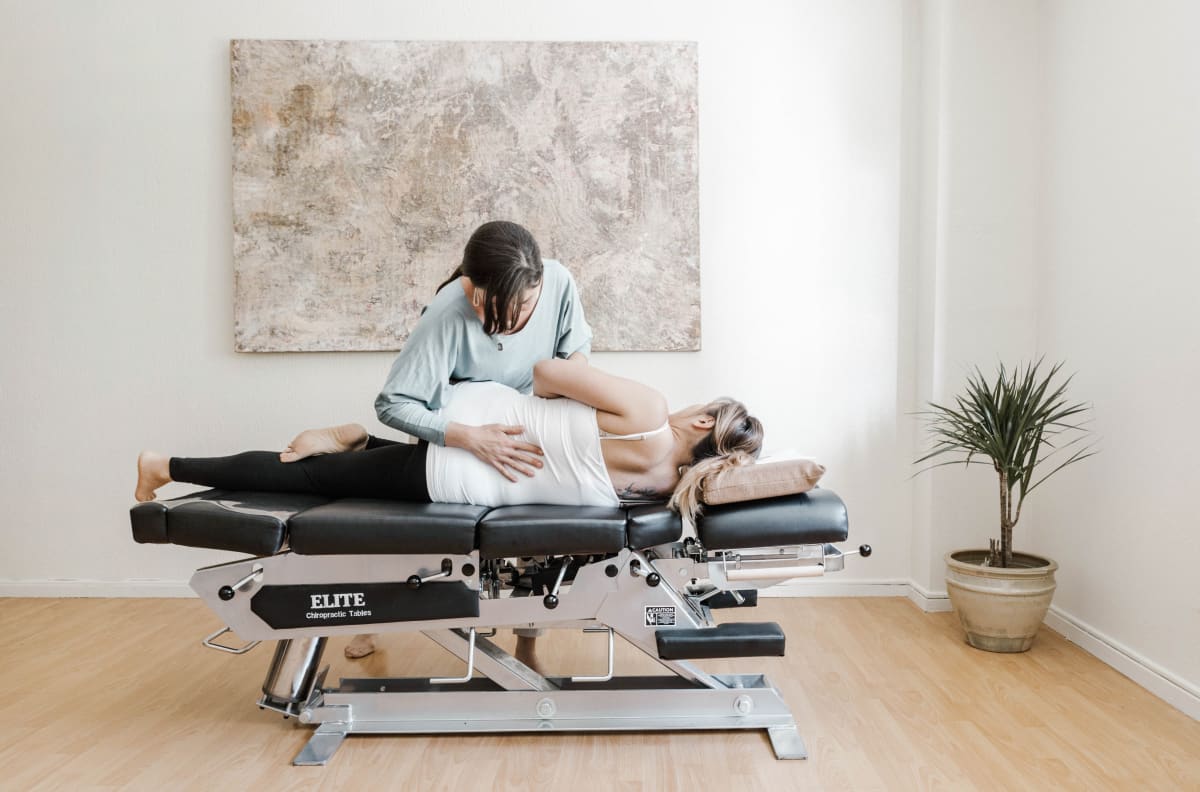
A spinal adjustment is a quick, specific movement applied to a joint of the spine that isn’t moving well.
Before anything is adjusted, the joint is found by assessment, not by guesswork, and you’re told what’s about to happen. The force used depends on the technique: some adjustments are manual, and some use a drop table or a low-force instrument.
It’s not about the “crack.” Sometimes there’s an audible pop and sometimes there isn’t; either way, the adjustment is the same. More on what the pop actually is, and whether cracking your own back is bad.
The American College of Physicians’ guideline starts from the fact that most new low back pain improves over time, whatever the treatment. So the first steps are things you can do yourself.
That’s why care at The Shift pairs any adjusting with specific exercises and advice on staying active, and why you get the plan and its total cost in writing before you agree to anything. If your pain travels down your leg, see sciatica and leg pain.
Sources: Qaseem A, et al. Annals of Internal Medicine. 2017;166(7):514–530. doi:10.7326/M16-2367 · NICE guideline NG59, recommendations 1.2.1 and 1.2.7 (last updated July 2026) · de Zoete A, et al. Cochrane Database of Systematic Reviews. 2026;CD008112. doi:10.1002/14651858.CD008112.pub3 · Rubinstein SM, et al. BMJ. 2019;364:l689. doi:10.1136/bmj.l689 · Dahm KT, et al. Cochrane Database of Systematic Reviews. 2010;CD007612. doi:10.1002/14651858.CD007612.pub2 · Hayden JA, et al. Cochrane Database of Systematic Reviews. 2021;CD009790. doi:10.1002/14651858.CD009790.pub2
Back pain rarely stays local, so the first visit looks at your hips, pelvis and mid-back as well as the painful area. Your first visit usually runs up to an hour, one patient at a time, in a private room.
Follow-up visits are shorter. If the exam shows the problem belongs with another provider, you’ll be told so and referred.
435 8th Street #203, on the corner of 8th and Broadway in Downtown Oakland. Same-day appointments are often available — a doctor is in the office six days a week.
Our approach is holistic: we look at the whole body, not just the spine. Every adjustment is matched to you, and gentle, low-force options are always available.
Our primary method: precise, hands-on adjustments of the spine and the extremity joints.
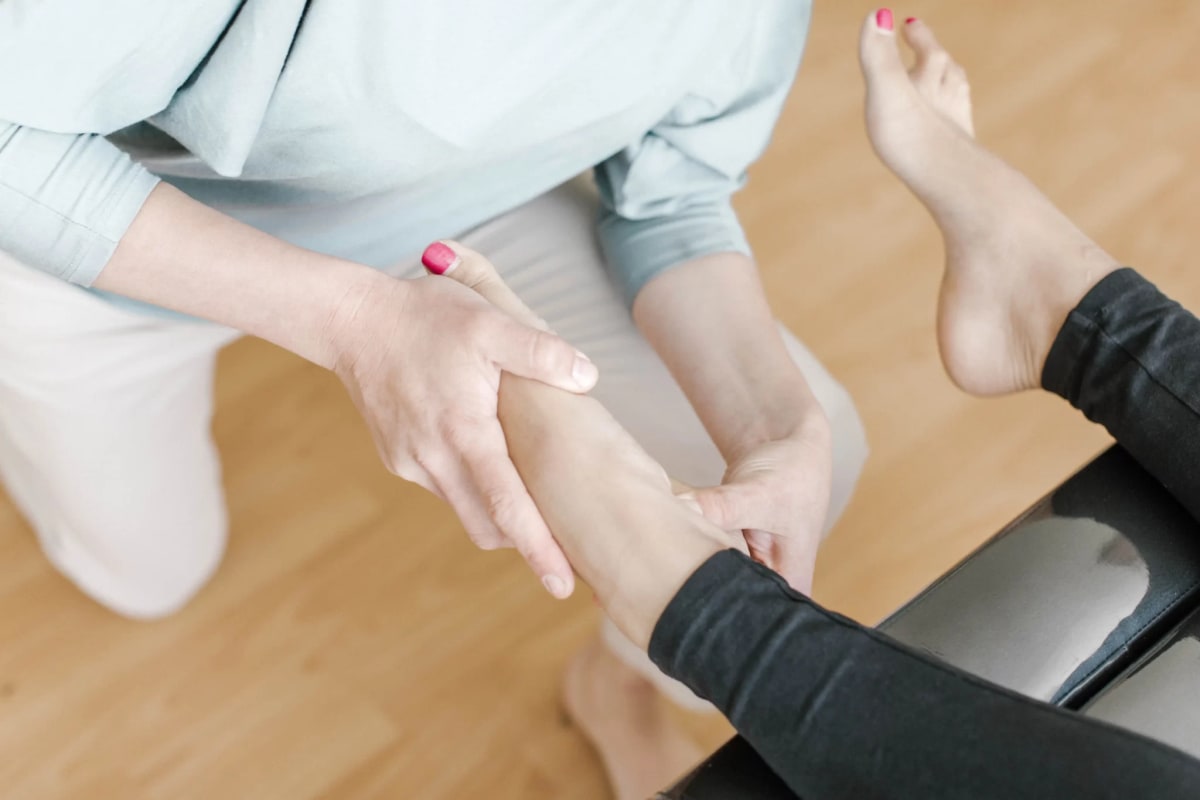
We don’t stop at the spine. Hips, knees, ankles, shoulders and wrists are assessed and adjusted when they’re part of the picture, because they change how load reaches your back. See also wellness care.
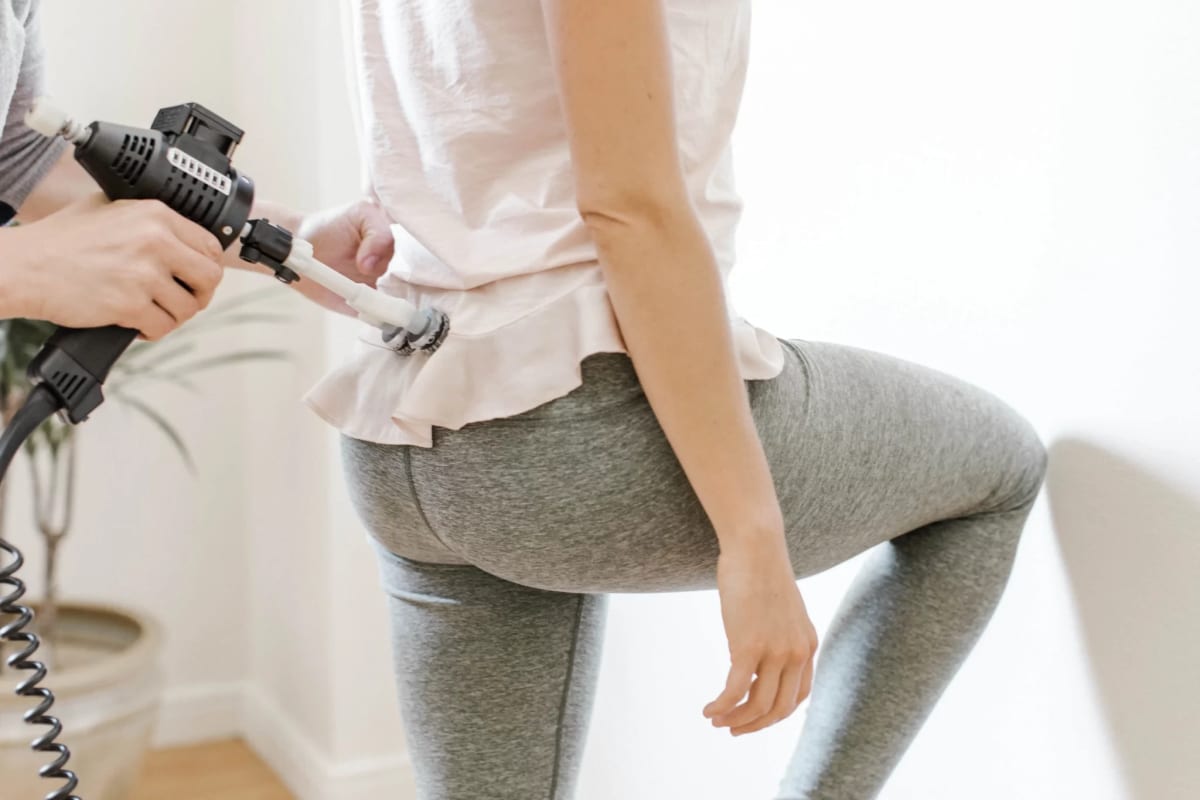
If you’re sensitive or prefer a gentler touch, the Arthro-Stimulator is a handheld instrument that delivers a series of low-force, rhythmic impulses to the targeted area, without manual pressure.
The drop table has sections that drop a short distance during the adjustment, so less force is needed. It’s a common choice if you’re uncomfortable with manual adjusting or moving is difficult for you.
Chiropractic care addresses back pain that comes from mechanical restriction in the lumbar or thoracic spine, the sacroiliac joints and the surrounding muscles. At The Shift Chiropractic the assessment covers joint motion, sacroiliac function, pelvic alignment, muscle guarding and posture, plus a neurological screening where there’s radiating pain, numbness or weakness. Not all back pain is mechanical, and part of a good examination is recognizing what belongs elsewhere and referring it.
A specific, controlled force applied to a spinal or extremity joint to restore movement where it has been lost. It can be delivered by hand, on a drop table (Thompson technique), or with a low-force instrument such as the Arthro-Stimulator if you’re sensitive or prefer a gentler approach. The technique is matched to you rather than applied as a single default.
Not routinely. Imaging makes sense when your history or examination raises a specific question that imaging would answer, such as trauma, red flags, a suspected structural problem, or a case that isn’t responding as expected. If imaging is recommended, you’ll be told what question the images are meant to answer.
Sciatica describes pain radiating along the path of the sciatic nerve, usually from irritation or compression of the nerve roots in the lumbar spine, or from tension in the muscles the nerve passes through. Because the source can sit anywhere from the lumbar spine to the pelvis, the assessment covers the whole chain, not just the spot that hurts.
Tell us at booking or at the start of the visit. Radiating pain, numbness or weakness gets a neurological screening at your first visit, and if the findings point to something that needs a medical workup, you’ll be referred.
No referral is needed.
A first visit usually runs up to an hour. It includes a full health history, a posture and movement assessment and a neurological screening, and we talk through what we found before any adjustment. Follow-up visits are shorter.
Yes. Dr. Ben Glass starts at 7:30 am on Tuesdays and Thursdays and is in every Saturday from 7:30 am to 1 pm.
We don’t bill insurance directly. You can use HSA or FSA funds, and we can provide a superbill if you’d like to submit for out-of-network reimbursement yourself. Some employers offer wellness benefits that can help cover chiropractic care. Check with your HR team.
There’s no shortcut that works for everyone. For new back pain, guidelines start with staying active, heat and keeping up your normal activities as much as you can; bed rest isn’t better than staying active. Most new low back pain improves over time. If it isn’t easing, or you have any warning signs, get it checked. Chiropractic care is one of several non-drug options, and reviews find results similar to other conservative care.
Go to an emergency room now if back or leg pain comes with loss of bladder or bowel control or trouble starting to urinate, numbness in your groin, inner thighs or buttocks, or weakness in both legs or a foot that’s getting weaker. See a physician soon, not a chiropractor first, if the pain follows a fall or injury with significant force, if you have a fever, unexplained weight loss or a history of cancer, or if the pain is severe at night and doesn’t change with position.
Keep moving: short walks and changing position often. Try heat, such as a heating pad. Keep up your normal activities as much as you can, and if you need to rest, keep it short. If you sit for work, check your chair and screen height. If the pain isn’t easing, or you have any warning signs, get it checked.
Longer pieces on the complaints that most often bring people in with back pain: