There is a category of person in Oakland who knows their body better than almost anyone else -- and almost never gets talked about in healthcare conversations. Not athletes. Not construction workers. Not even surgeons.
Performers.
The musician who plays a three-hour show on Friday, loads their own gear, drives home, and does it again Saturday. The dancer who rehearses six days a week in a rented studio and cannot afford to take a week off when their hip starts clicking. The vocalist who holds tension in their jaw and shoulders from the moment they step on stage. The visual artist hunched over a canvas for eight hours at a time, their cervical spine loaded in a position no spine was designed to hold for that long.
These people know their bodies intimately. They have to. Their livelihood is in their instrument, and their instrument is their body. But most of them are running that instrument without a maintenance system -- and the miles add up.
The performer's paradox: Your body is your livelihood. You know it better than anyone. And you are almost certainly under-investing in its upkeep because the industry does not build that infrastructure for you the way it does for professional athletes.
Oakland's Creative Economy -- and the Body Load It Carries
Oakland has one of the most active creative communities in the country. Musicians, producers, dancers, poets, visual artists, theater performers, comedians, DJs. The scene runs from Uptown clubs to East Oakland studios to basement rehearsal spaces that have launched nationally recognized careers.
What that creative economy does not come with is a team trainer, a performance staff, or a recovery budget. Professional athletes have sports medicine physicians, physical therapists, chiropractors, and massage therapists on payroll or on retainer. The professional musician playing a headlining show at a 500-person venue on Friday night has the same access to those resources as the person who never performs at all -- which is to say, whatever they can cobble together on their own.
The physical demands are not trivial. They are just invisible to the industry that profits from them.
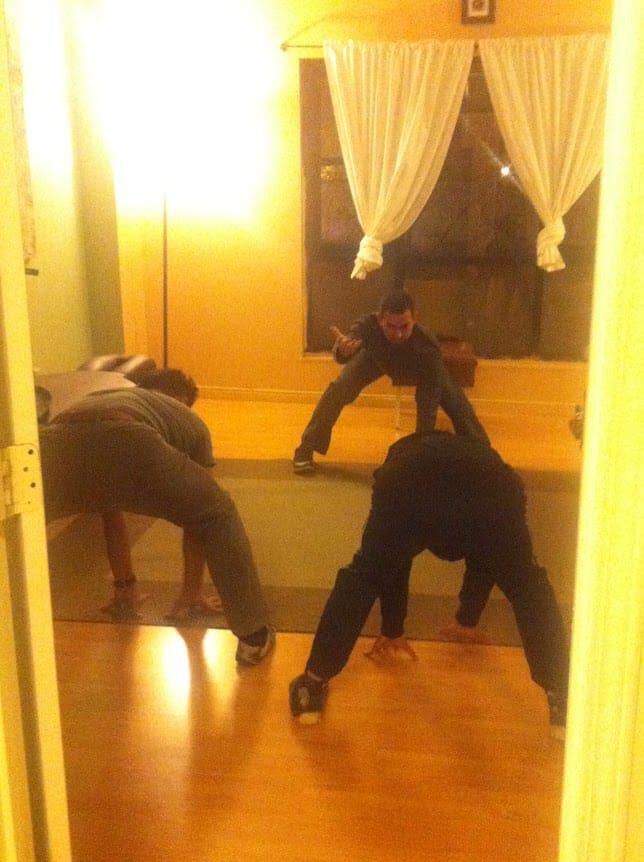
The Physical Demands by Craft
Every performing art has a specific physical profile. The injuries, the compensation patterns, and the spinal loading all follow predictable paths based on what the craft requires. Here is what we actually see at The Shift when performers come in.
🎵 Musicians
Primary demand: sustained posture + repetitive fine motor- Guitarists: cervical rotation left, left shoulder elevation, thoracic compression from the headstock weight pattern
- Drummers: bilateral shoulder overuse, lumbar rotation under load, wrist and elbow from hi-hat mechanics
- Pianists: thoracic kyphosis from forward seat position, bilateral wrist and forearm overuse, neck strain from music stand height
- Bassists: similar to guitar but heavier instrument -- left-side loading more pronounced
- Vocalists: jaw tension (TMJ), anterior neck strain from mic technique, thoracic restriction from breath management under stress
💃 Dancers
Primary demand: extreme range of motion + impact absorption- Hip flexor and SI joint stress from turnout patterns
- Lumbar hypermobility with thoracic compensation above
- Ankle and knee from landings -- often undertreated
- Cervical strain from spotting (repeated rapid rotation)
- Rib restrictions from partnering and lift mechanics
- Stress fracture patterns in lumbar and foot from high-volume rehearsal
🎨 Visual Artists & Designers
Primary demand: sustained static posture + fine motor- Cervical forward head posture from canvas/screen proximity
- Thoracic kyphosis from extended forward flexion
- Wrist and elbow overuse from brushwork, mouse use, or tool handling
- Bilateral shoulder restriction from overhead painting or installation work
- Lumbar strain from standing at an easel for hours without proper support
🎤 DJs, Producers & Sound Engineers
Primary demand: prolonged static work + repetitive arm mechanics- Cervical and upper thoracic strain from monitor and headphone use
- Bilateral wrist and forearm from fader and knob mechanics
- Lumbar compression from booth seating over long sets
- Hip flexor shortening from extended seated production sessions
- Shoulder elevation from raised controller height
Why Performers Are Different From Athletes
When a professional athlete gets hurt, the injury interrupts competition. It is visible, documentable, and economically significant to the team or the brand. That urgency drives investment in recovery infrastructure.
When a performer gets hurt, they often still perform. Because the show is booked. Because the rent is due. Because canceling has consequences that compound differently. And because the culture of most performance communities -- especially in music -- is built on the mythology of performing through pain rather than the science of managing it.
| Professional Athlete | Professional Performer | |
|---|---|---|
| Body demand | Intense but periodized seasons | Continuous, often year-round with no off-season |
| Recovery support | Team medical staff, trainers | Self-funded, self-organized |
| Injury response | Removed from play, protocol-driven | Often perform through injury regardless |
| Load management | Built into training program | Rarely planned, reactive at best |
| Industry support | Significant investment | Near zero systematic support |
"The musician who plays 200 shows a year carrying a guitar, loading a van, sleeping on a tour bus, and performing for two hours every night is under as much physical load as a mid-level professional athlete. But nobody is tracking their spine."
-- Dr. Ben Glass, D.C.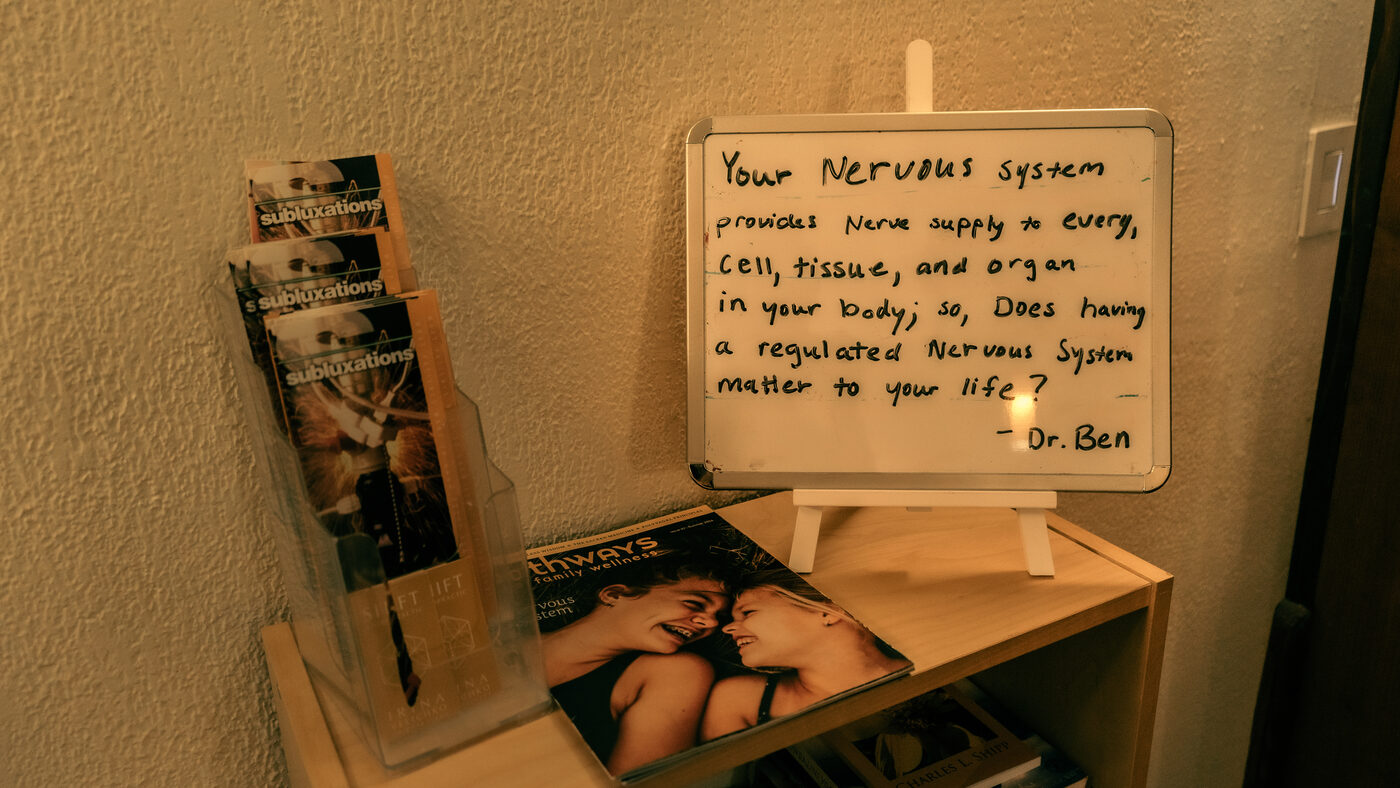
What We Address at The Shift for Performing Artists
Instrument-Specific Posture
We assess and correct the spinal patterns specific to your instrument or craft -- not generic chiropractic, but care that accounts for how you actually use your body.
TMJ and Jaw Tension
Vocalists, wind instrument players, and performers who carry stress in their jaw. Cranial and cervical work to address the TMJ directly.
Wrist, Elbow & Shoulder
Extremity adjusting for the repetitive fine motor demands of playing, painting, and production work. Full kinetic chain assessment, not just the site of pain.
Nervous System Regulation
Performance anxiety lives in the body as real physical tension. Adjusting helps shift the nervous system out of the chronic stress state that performing can lock you into.
Maintenance Scheduling
We build care plans around your performance calendar -- heavier before heavy seasons, maintenance through regular schedules. The body gets managed, not just reacted to.
Pre-Show Tune-Ups
Some performers come in the day before a major show. Quick cervical and thoracic release, nervous system check-in. Performing from a cleared baseline feels different.
Your body is your instrument. Tune it accordingly. A doctor in the office six days a week. Same-day appointments often available.
Book Your AssessmentAdd video here -- Dr. Ben on chiropractic for musicians and performers
Mention Oakland's music scene specifically for local reach
The Longevity Question
The performers who play into their 60s and 70s -- who are still actively creating, still on stage, still making the work -- are not the ones with the most talent. Talent is relatively evenly distributed among people who make it to a professional level. The ones who last are the ones who managed the physical cost of the craft over time.
That means understanding what your specific discipline does to your spine, your joints, and your nervous system. It means not waiting until something breaks to address it. It means treating the body with the same respect and investment that you give to your gear, your rehearsal time, and your craft.
Oakland has too much talent to let it be derailed by preventable physical breakdown. That is why we are here. And it is why this work matters to us beyond the clinical.
Frequently Asked Questions
Directly -- yes. Performance anxiety is not just a psychological state. It produces real physical changes: elevated muscle tone, restricted breathing, jaw and shoulder tension, altered proprioception. Chiropractic adjusting helps regulate the autonomic nervous system, shifting it toward a more parasympathetically dominant state. Many performers report that regular adjusting reduces the physical intensity of pre-show anxiety, even when the mental component remains. We are not treating anxiety -- we are removing the physical interference that amplifies it.
Almost certainly yes, at least in part. That asymmetric shoulder elevation is a postural compensation pattern driven by how you hold the instrument -- but it does not stay at the shoulder. It creates cervical rotation, thoracic scoliosis loading, and rib restrictions that compound over years. We assess the full pattern from the cervical spine down, correct the restrictions that are feeding the asymmetry, and give you specific guidance on positioning and ergonomics that can reduce how much load your craft creates in the first place.
TMJ dysfunction is extremely common in performers, particularly vocalists, wind players, and people who carry stress in the jaw. We address TMJ through a combination of upper cervical adjustment (the atlas and axis have a direct relationship with jaw mechanics), cranial care to release tension in the temporal bones, and soft-tissue release in the masseter and pterygoid muscles when indicated. Dr. Irina has specific training and experience with TMJ care and is excellent at this work.
For working performers with an active schedule -- regular gigs, rehearsals, or production sessions -- we typically recommend every 2-4 weeks as a maintenance baseline. During heavy performance seasons or tours, more frequent care makes sense. Some performers come in the day before major shows for a pre-performance tune-up. We build the schedule around your actual calendar, not a generic protocol.
Yes -- and this is work we find genuinely compelling. Dancers present a unique clinical picture: extreme range of motion in some directions combined with significant restriction in others, plus the repetitive impact loading of rehearsal and performance. We assess hip and SI joint mechanics carefully, address the lumbar and thoracic patterns that develop from dance-specific postures, and work with the extremity joints -- ankle and knee especially -- that take the load of landings. Dr. Irina's background includes significant experience with dancers and movers.
Your Body Is Your Instrument. Treat It Like One.
Schedule your assessment at The Shift Chiropractic -- 435 8th Street #203, downtown Oakland. A 4-minute walk from 12th Street BART. A doctor in the office six days a week. Same-day appointments often available.
Book Your Assessment