Most people who have been to a chiropractor remember the same thing: someone pushed on their back and their spine made a noise. Maybe they felt better after. Maybe they came back. But they could not have told you why it worked -- or whether the person doing it actually knew what they were doing, or just got lucky.
That is the problem with how chiropractic is often delivered. The adjustment is treated as the product -- a pop, a crack, a quick manipulation -- rather than what it actually is, which is the outcome of a careful reading process. The adjustment itself is the last thirty seconds. Everything before it is the work.
The adjustment is not the art. Reading the body before the adjustment is the art. The correction only works as well as the understanding behind it.
What "Reading a Body" Actually Means
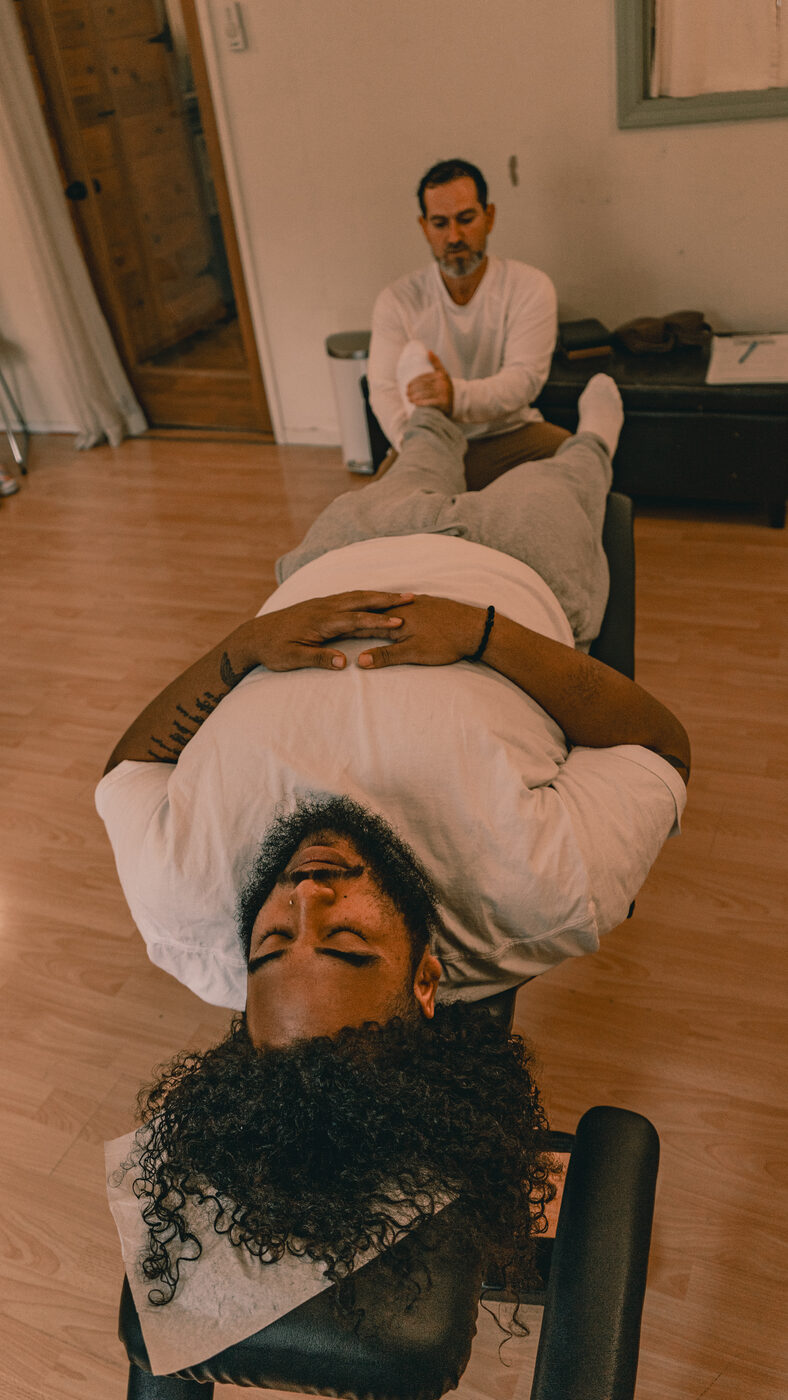
Before we put a hand on anyone, we are already gathering information. The way you walked into the room. Whether your left shoulder sits higher than your right. How you sat down. Where you brace when you shift your weight. The history you gave us -- not just the injury, but the life around it. All of it is signal.
Then we get specific. We go through a systematic assessment of your spine and extremities: range of motion testing, orthopedic evaluation, neurological screening, and palpation. Palpation is where it gets interesting. A trained chiropractor can feel the difference between a joint with normal motion and one that has lost its full range. The texture of the tissue changes. The resistance changes. The segment sits differently under the hands. This is a learnable skill, but it takes years of deliberate practice under qualified mentorship to develop it at the level it needs to be at.
The Three Things We Are Looking For
Every assessment, regardless of what brought you in, is looking for the same three things in some combination. Miss any one of them and you are not giving the body what it actually needs -- you are just guessing.
Restriction -- where is the movement gone?
A restricted segment has lost normal range of motion. It can be hypomobile -- barely moving at all -- or it can be stuck at an angle that loads the surrounding tissues asymmetrically. Finding the exact level, the exact direction of restriction, and the quality of that restriction determines everything about how the correction is delivered. A restriction at C5 moving into left lateral flexion is a different clinical finding than C5 restricted in rotation, even though they are the same vertebra. The adjustment vector changes completely.
Compensation -- what has the body built around it?
The body is relentlessly adaptive. When one segment cannot move, adjacent segments take up the slack. When one muscle cannot fire properly, others recruit to compensate. By the time most patients come to us, the original restriction has been surrounded by layers of compensation that can be years old. Treating only the thing that hurts is often the wrong move -- the pain is frequently at the compensation site, not the source. We have to trace the pattern back to its origin.
Neurological state -- what is the nervous system doing?
The spine isn’t just a mechanical structure. The nervous system is continuously monitoring and responding to the state of every joint and tissue in the body. When there is chronic restriction or threat-level tissue loading, the nervous system responds accordingly -- elevated muscle tone, guarded movement, altered proprioception. The adjustment works partly because it resets this neurological state, not just because it moves a bone. We assess which direction of neurological response would most benefit you before we choose how and where to adjust.
Why Not Every Adjustment Looks the Same
This is the thing that confuses patients who have been to multiple chiropractors. At one office, everyone gets the same side-lying lumbar rotation. At another, the practitioner uses a drop table for everything. At another, it is all instrument adjusting. Each practitioner has a default. A comfort zone. A technique they learned well and return to regardless of what the patient's spine is actually asking for.
At The Shift, we use multiple techniques -- not because we cannot decide, but because different presentations genuinely require different approaches. Selecting technique based on what the assessment reveals, not what happens to be easiest or most familiar, is one of the things that defines skilled clinical practice.
| Technique | What It Does Best | When We Use It |
|---|---|---|
| Manual High-Velocity Thrust | Specific segmental correction, followed by reassessment | Healthy adults with clear restriction, good tissue tone |
| Drop-Table | Gentle correction without rotational loading on the spine | Sensitive patients, disc involvement, post-surgical |
| Instrument (Arthro-Stim) | Ultra-precise, no-force delivery to exact segment | Patients who prefer a lower-force approach |
| Mobilization | Gradual restoration of range without manipulation | Acute inflammation, severe guarding, anxious first-timers |
| Extremity Adjusting | Joint-specific correction in shoulder, knee, ankle, wrist | Extremity dysfunction, kinetic chain involvement |
The Sensei Analogy -- And Why It Actually Fits
A good martial arts sensei does not teach the same technique the same way to every student. They assess what the student brings -- body type, movement tendencies, where they hold tension, what they over-commit to. The instruction is precise, individualized, and based on close observation. The correction is not what the sensei wants to do. It is what the student actually needs.
This is exactly the model we work from. You are not a generic spine. You are a specific person with a specific history, a specific nervous system state, specific movement patterns, and specific goals. The adjustment we give you should reflect all of that. It should be chosen for you, not performed on you.
"The quality of the adjustment depends entirely on the quality of the assessment that preceded it. A practitioner who skips the reading and goes straight to the correction is not adjusting -- they are guessing with force."
-- Dr. Ben Glass, D.C.Add video here
Dr. Ben walking through an assessment and adjustment -- narrated
Shows the reading process, not just the pop
What This Means for Your First Visit
When you come to The Shift for the first time, you are not getting a quick evaluation followed by a generic treatment. You are getting a genuine clinical assessment -- the kind that tells us what your spine is actually doing, what your nervous system is managing, and what specific correction fits what we found that day.
This takes more time upfront. It requires you to share your history honestly and completely. It asks us to listen carefully and observe closely before we act. But it produces a different quality of result than the assembly-line approach -- and it is the only kind of practice we are interested in running.
👀 What We Observe
Posture, gait, movement patterns, how you protect certain areas, what you describe and what you don't.
This happens before you reach the table📋 What We Assess
Orthopedic and neurological testing, range of motion, segmental palpation, tissue quality, neurological tone.
This builds the clinical picture🧠 What We Consider
Your history, your life demands, your nervous system's current state, and what your body is ready for today.
Context shapes the clinical decision🎯 What We Deliver
A specific correction to the segment that needs it, using the technique that fits your presentation. Followed by immediate reassessment to confirm the change.
Precision -- not just forceCome experience the difference between a generic adjustment and a precise one. New patients welcome. A doctor in the office six days a week. Same-day appointments often available.
Book Your AssessmentFrequently Asked Questions
No. The audible pop -- called a cavitation -- is the release of gas from the synovial fluid in the joint. It can happen with a manual adjustment, but many adjustments are completely silent, especially with instrument adjusting or drop-table technique. The sound has become associated with the adjustment in popular culture, but the sound isn’t what makes an adjustment work.
We have multiple techniques available that produce no audible release and involve no rotational thrusting. Drop-table and instrument adjusting involve no rotational thrust, for patients who prefer not to be manipulated in the traditional sense. We discuss this at your first visit and adapt the approach accordingly. Your comfort and trust are part of the treatment.
This is where palpation skill and clinical assessment matter. We combine orthopedic and neurological testing with careful hands-on evaluation of each spinal segment -- assessing motion quality, tissue tone, and position. Specific findings like restricted motion in a particular direction, asymmetric muscle tension, and neurological indicators help us identify the segment that needs correction. When indicated, we may also use X-ray or MRI findings to inform the clinical picture.
Every practitioner develops defaults based on their training and comfort. Some also use assessment systems that produce consistent findings. But the spine changes visit to visit -- what restricted last week may have changed, and new patterns may have emerged. A good chiropractor reassesses at every visit and adapts accordingly. At The Shift, we palpate at every visit before we adjust. The findings drive the treatment, not the other way around.
Chiropractic adjusting has an excellent safety record compared to most medical interventions for the same conditions. The most commonly reported side effect is mild soreness in the adjusted area for 24-48 hours, similar to the soreness after exercise. Serious adverse events are extremely rare. We conduct a thorough assessment before treating to identify any contraindications, and we choose the technique that is appropriate for your specific presentation. If we identify anything that suggests chiropractic is not appropriate for you, we tell you and refer you to the right provider.
Experience the Difference a Precise Assessment Makes
Schedule your first visit at The Shift Chiropractic -- 435 8th Street #203, downtown Oakland. A 4-minute walk from 12th Street BART. A doctor in the office six days a week. Same-day appointments often available.
Book Your First Visit