The Chinatown Connection
Bruce Lee trained in Oakland. Not far from where we practice, actually. He taught at the Oakland Martial Arts Institute on Broadway in the 1960s -- right in the neighborhood that shaped The Shift Chiropractic. We think about that a lot.
Because his philosophy -- the one he summed up in those three words, "be like water" -- is not just a martial arts principle. It is one of the most accurate descriptions of how a healthy spine and nervous system actually work. And it is exactly what breaks down when injury, stress, and rigidity take over.
"Empty your mind. Be formless, shapeless -- like water. Now you put water into a cup, it becomes the cup. Be water, my friend." -- Bruce Lee
Oakland's Chinatown has been a center of holistic healing for over 150 years. Acupuncture, herbal medicine, martial arts, movement practices -- these were never separate from health care here. They were health care. The understanding that the body is a system, that energy flows through it, that restriction causes dysfunction and flow creates vitality -- this was the operating philosophy of an entire community long before Western medicine started catching up.
Bruce Lee absorbed this. He trained in Wing Chun under Ip Man in Hong Kong before bringing his practice to Oakland. Wing Chun is built on the principle of yielding to force, redirecting rather than resisting, staying soft so you can respond to anything. It is the physical expression of "be like water."
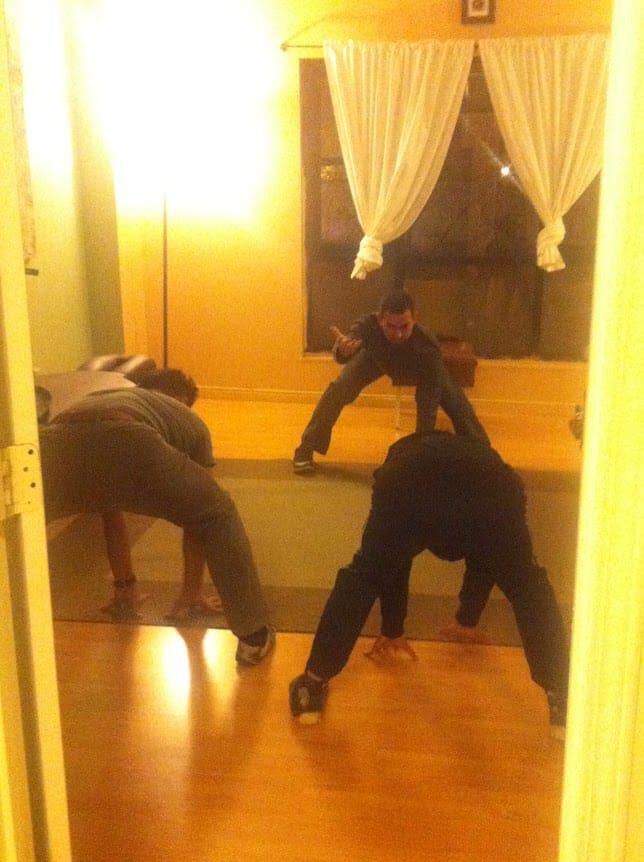
We practice around the corner from that world. And the philosophy lives in how we approach every adjustment. Your spine is not a mechanical structure to be forced into position. It is a living, adaptive system. Our job is to remove what is blocking its flow -- not impose our will on it.
What Rigid Means in the Spine
When the spine loses its fluid movement -- when individual segments become restricted, when muscles chronically guard, when the nervous system gets stuck in a high-alert state -- the body stops being like water. It becomes like ice. Hard, brittle, unadaptable. Ice cracks under pressure. Water moves around it.
This is not metaphor. It is biomechanics. A spine with healthy segmental motion distributes load evenly, responds to impact by dispersing force, and recovers from stress quickly. A rigid spine concentrates load at the restricted segments, gets injured at those points repeatedly, and takes far longer to recover.
| Fluid Spine (Water) | Rigid Spine (Ice) |
|---|---|
| Distributes force across multiple segments | Concentrates load at restricted joints |
| Adapts quickly to stress and impact | Breaks down under repeated stress |
| Nervous system stays regulated | Nervous system stuck in stress response |
| Recovers fast -- returns to baseline | Slow recovery -- compensation patterns build |
| Movement feels natural and effortless | Movement feels guarded and restricted |
Flow State and the Nervous System
Athletes and performers know flow state -- that place where everything clicks, where movement feels automatic, where you stop thinking and just do. Athletes describe it. Musicians chase it. Martial artists live for it. What almost nobody talks about is the neurological foundation that makes flow state possible.
It requires your nervous system to be in a very specific state: parasympathetically dominant, alert but not hypervigilant, sensing the environment clearly and responding without lag. Vertebral subluxations -- restricted spinal segments creating interference in your nerve pathways -- pull you out of that state. They are static in the signal. They create a background noise in your nervous system that makes true flow harder to access, regardless of how skilled you are or how hard you train.
The nervous system does not distinguish between physical threat and structural interference. Both create the same stress response. Clear the interference, and the system can finally settle into the state where real performance lives.
Add video here -- Dr. Ben on flow state and spinal health (2-3 min)
Replace this block with your YouTube embed
Training Hard, Staying Fluid
Bruce Lee did not believe in softness for its own sake. He trained relentlessly. He developed his body with obsessive attention. But the whole philosophy of Jeet Kune Do -- the martial art he created -- is based on having no fixed form. You absorb what is useful. You discard what is not. You add what is specifically your own.
This maps directly onto how we think about athletic recovery and chiropractic care at The Shift. You can train hard. You should train hard. But you need the recovery infrastructure to match the training intensity. And that infrastructure starts with a nervous system that can shift -- from output to recovery, from stress to restoration, from tension to release.
What This Looks Like in Practice
- Train with intensity and precision -- never apologize for demanding a lot from your body
- Recover like water -- fluid, adaptive, without resistance or forcing
- Get adjusted regularly -- remove what is blocking the flow before it becomes pain
- Let your body do what it was designed to do when you stop interfering with it
What This Means at The Shift
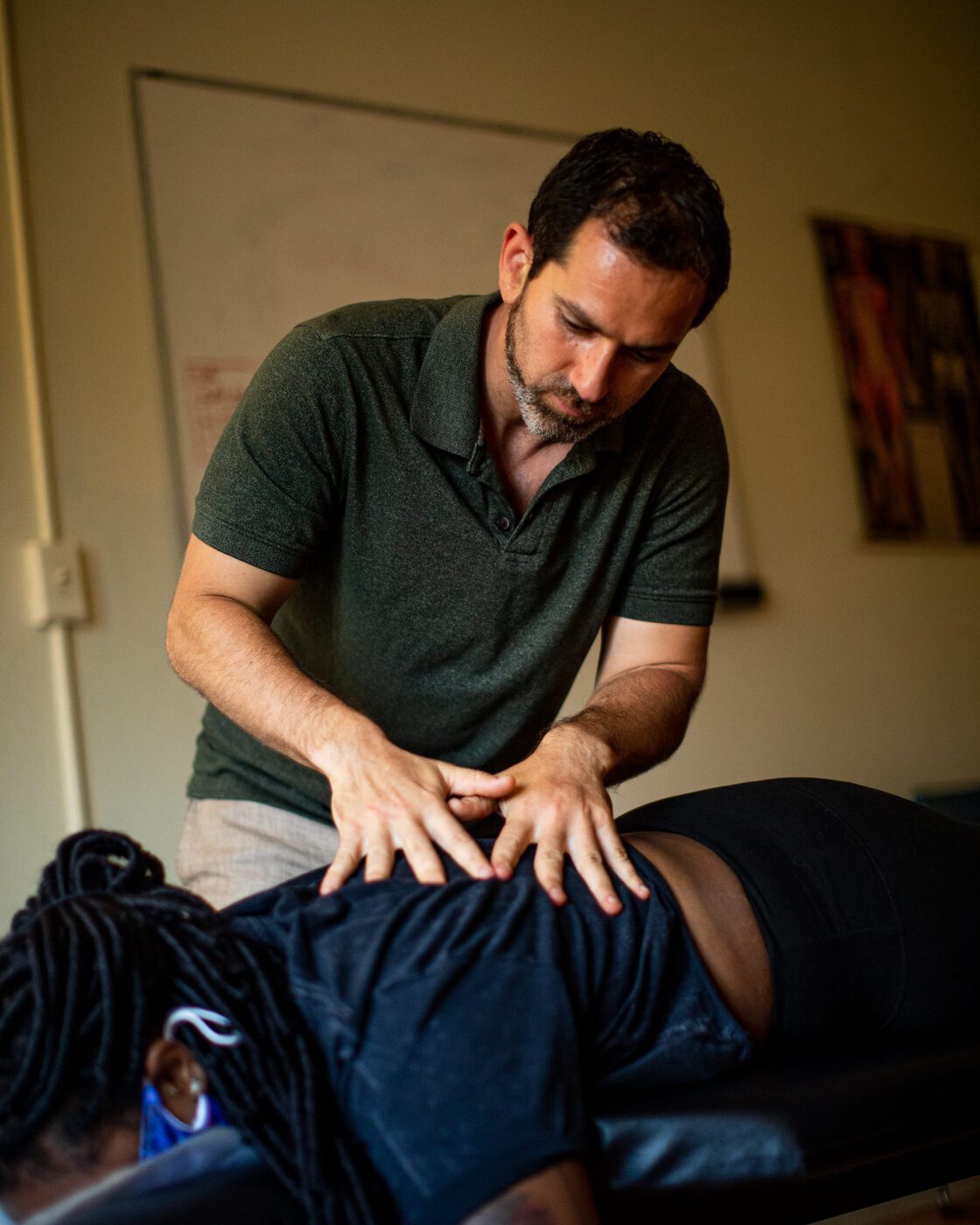
The best adjustments we give are the ones that feel like almost nothing -- a gentle, specific correction that allows the vertebra to find its natural position because the resistance to that position has been released. Not pushed in. Released to.
That distinction matters. We are not mechanics installing a part. We are practitioners helping a living system rediscover its own capacity. Be like water. Remove the obstruction. Let it flow.
OAKLAND ROOTS: Bruce Lee's time in Oakland shaped his philosophy. Our practice is built in that same neighborhood, drawing on that same commitment to the art of the body -- treated with precision, respect, and a deep belief in what the human system can do when it is not in its own way.
Ready to experience what alignment actually feels like? A doctor in the office six days a week. Same-day appointments often available. 435 8th Street #203, Oakland, CA 94607.
Book NowFAQ
Flow state requires a regulated nervous system -- alert but not hypervigilant. Vertebral subluxations create chronic interference in nerve pathways, functioning as background stress that makes the regulated state harder to access. Adjustments remove that interference, which is one reason athletes and performers often report improved clarity and responsiveness after regular care.
For active individuals -- athletes, martial artists, regular gym-goers -- we typically recommend a maintenance schedule of every 2-4 weeks once the initial course of care is complete. High-output training creates regular subluxation patterns, and staying ahead of those is far more efficient than waiting until pain forces you in.
Yes -- and it is particularly valuable for them. Contact sports create repetitive spinal stress and frequent minor subluxations. Chiropractic care helps the spine stay mobile and the nervous system stay regulated despite that repeated stress. Many professional fighters and martial artists use chiropractic as a core part of their performance maintenance, not just injury care.
Both are rooted in the same core principle: the body has an innate intelligence and capacity for health and high performance, and the goal of the practitioner -- or the martial artist -- is to remove what is in the way of that expression, not to impose a rigid system on top of it. Lee's "be like water" and chiropractic's focus on removing nerve interference share the same philosophical DNA.
Ready to Move Like Water?
Schedule your assessment at The Shift Chiropractic -- 435 8th Street #203, downtown Oakland. A 4-minute walk from 12th Street BART. A doctor in the office six days a week. Same-day appointments often available.
Book Your Assessment